
How to protect the skies?
THE SOLUTION?
Support the aircraft with safe landings and equipment.
Securing air superiority involved not just Allied planes in the air, but the successful landings, navigation and behind-the-scenes groundwork. Engineering made all this possible.
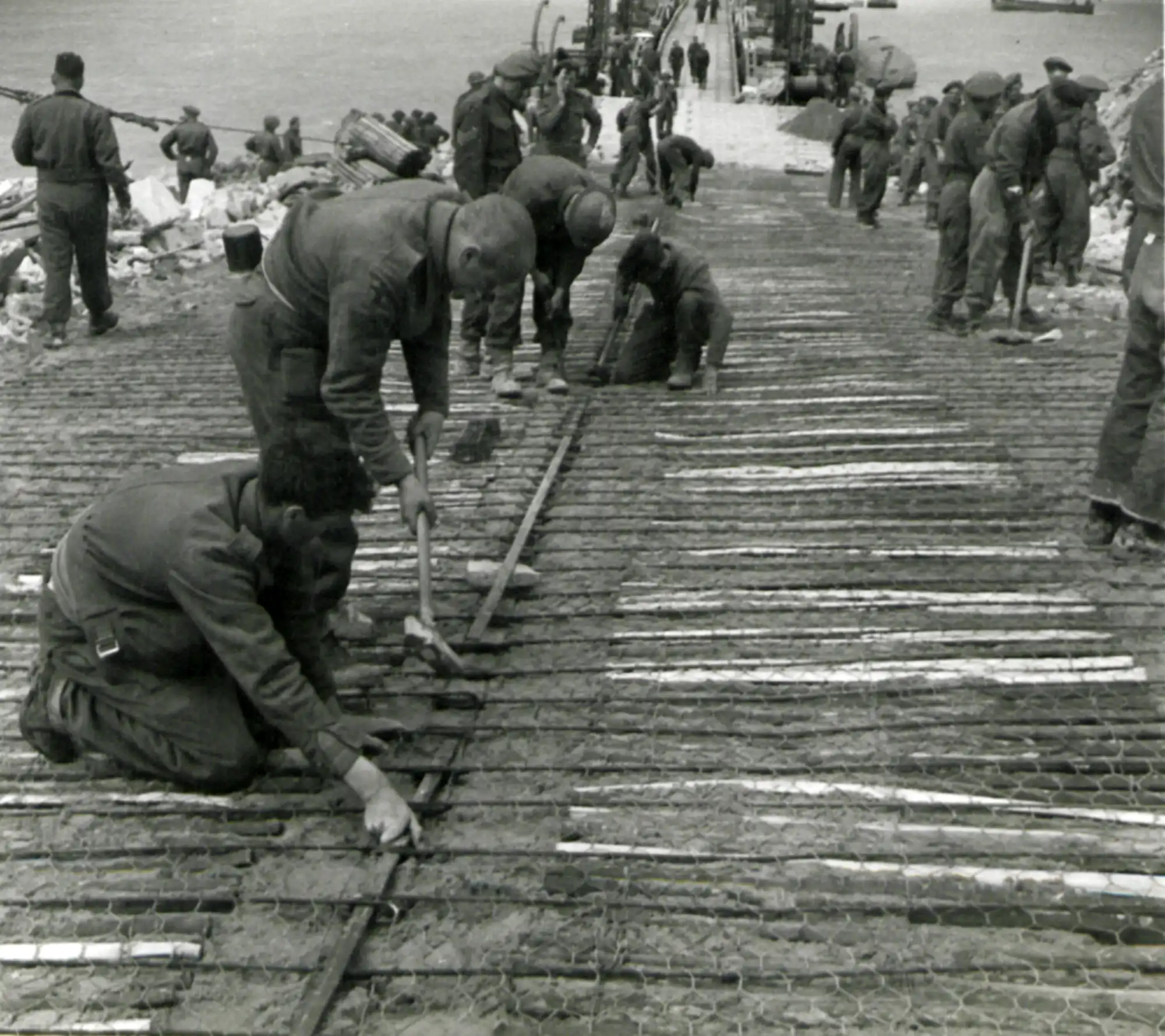
Sommerfeld Tracking was a prefabricated airfield surface. It had two roles: to disperse the weight of a landing aircraft, and to create stability in the soil. It was tested on Fowlmere airfield in Cambridgeshire early in 1941, and by August that year the Air Ministry had ordered nine million square feet (835,000 m²) of the matting. By the end of the war over 468 million square feet (43.5 million m²) had been produced.

Sommerfeld Track for Moveable Runways, a diagram showing methods of laying the track. REM HF94/1. K J & A Sommerfeld CC BY-NC-SA 4.0
The Tracking consisted of wire netting stretched taut over horizontal steel rods, with edges stiffened with steel bars and held in place by 3-foot (1m) pickets. Once in place a bulldozer would pull it into tension, creating a taut surface.
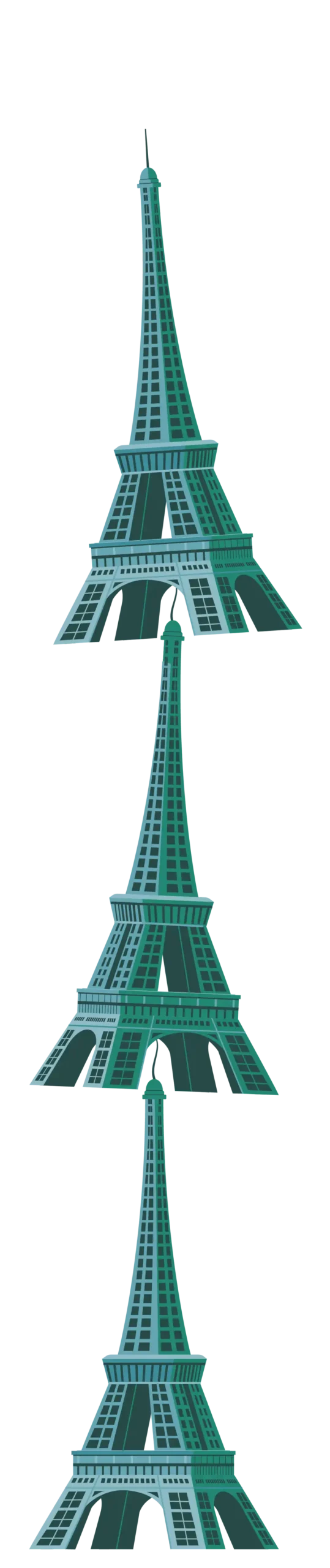
3000 feet = 3 Eiffel Towers, stacked
FIDO, or Fog Investigation and Dispersal Operations, was developed to reduce the number of British casualties incurred by landing in foggy conditions. By the end of 1940 the combined effects of battles and dangerous landings were resulting in aircraft and crew being lost faster than they could be replaced. Before the Clean Air Act of 1956, fogs were commonplace and far thicker than those we see today, causing major visibility problems both in the sky and on the ground.
The initial requirement for a fog dispersal system was to clear a runway 1000 feet long and 100 feet wide (300m x 30m), up to 100 feet (30m) into the air.
FIDO was a simple idea: along each side of a runway pipes were laid that could be pumped full of petrol. Burners were installed at intervals where the petrol vapours could be set alight. This produced a roar of flame down the length of the runway, and enough heat to evaporate the water droplets suspended in the air. The system was first tested in Moody Down in Hampshire on 4th November 1942 where it cleared 600 feet (180m) of fog to a height of 80 feet (24m). Just two months later in January 1943 Graveley airfield in Cambridgeshire was equipped with FIDO. When at full capacity it used 70,000 gallons of fuel an hour. While this was a huge use of resources, by the end of the war the system had assisted in the landing of 2500 aircraft, potentially saving the lives of 10,000 airmen. It had been installed in 15 UK airfields by the summer of 1944. There was even a portable FIDO airfield in Cambrai, which was installed by the Royal Engineers.